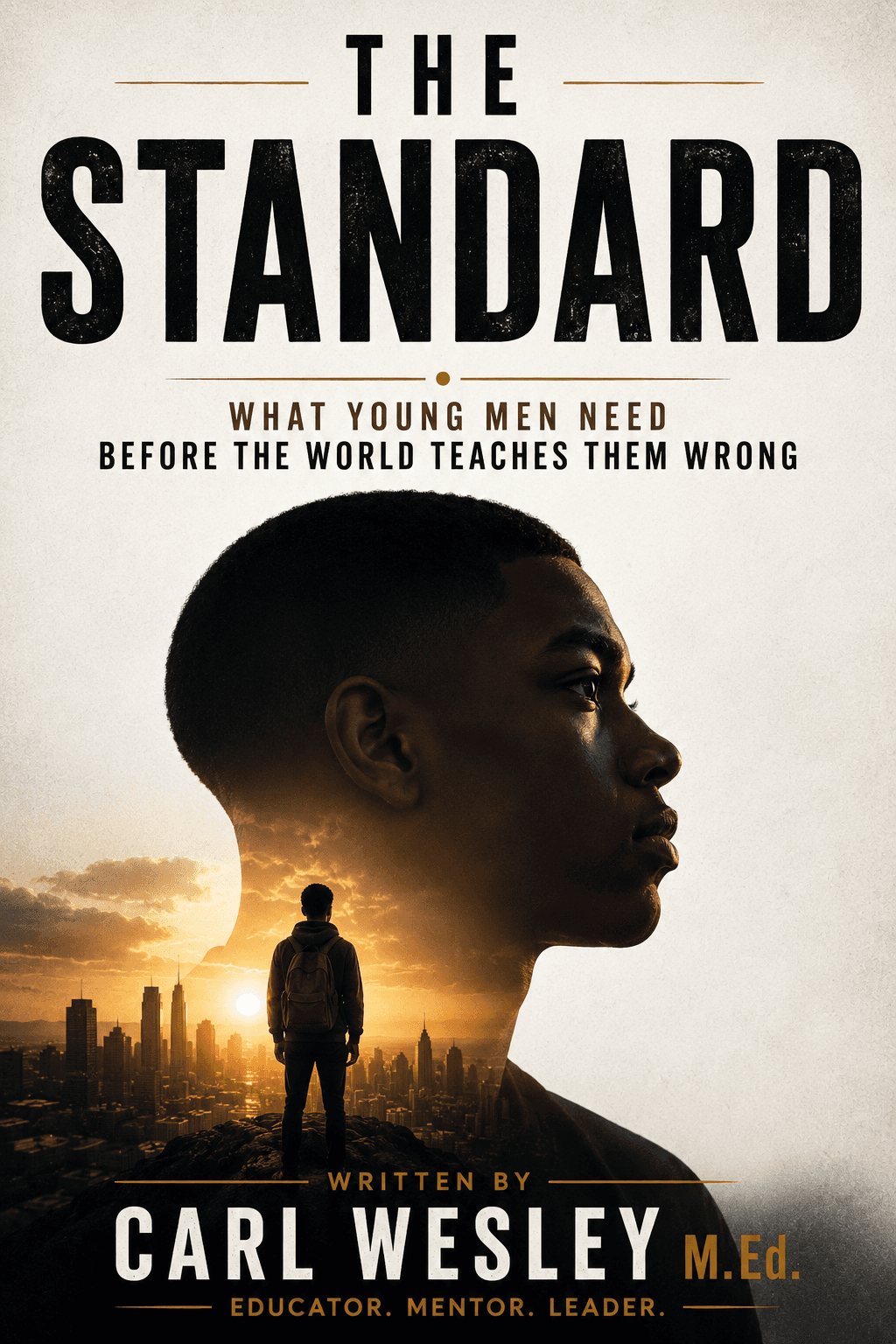
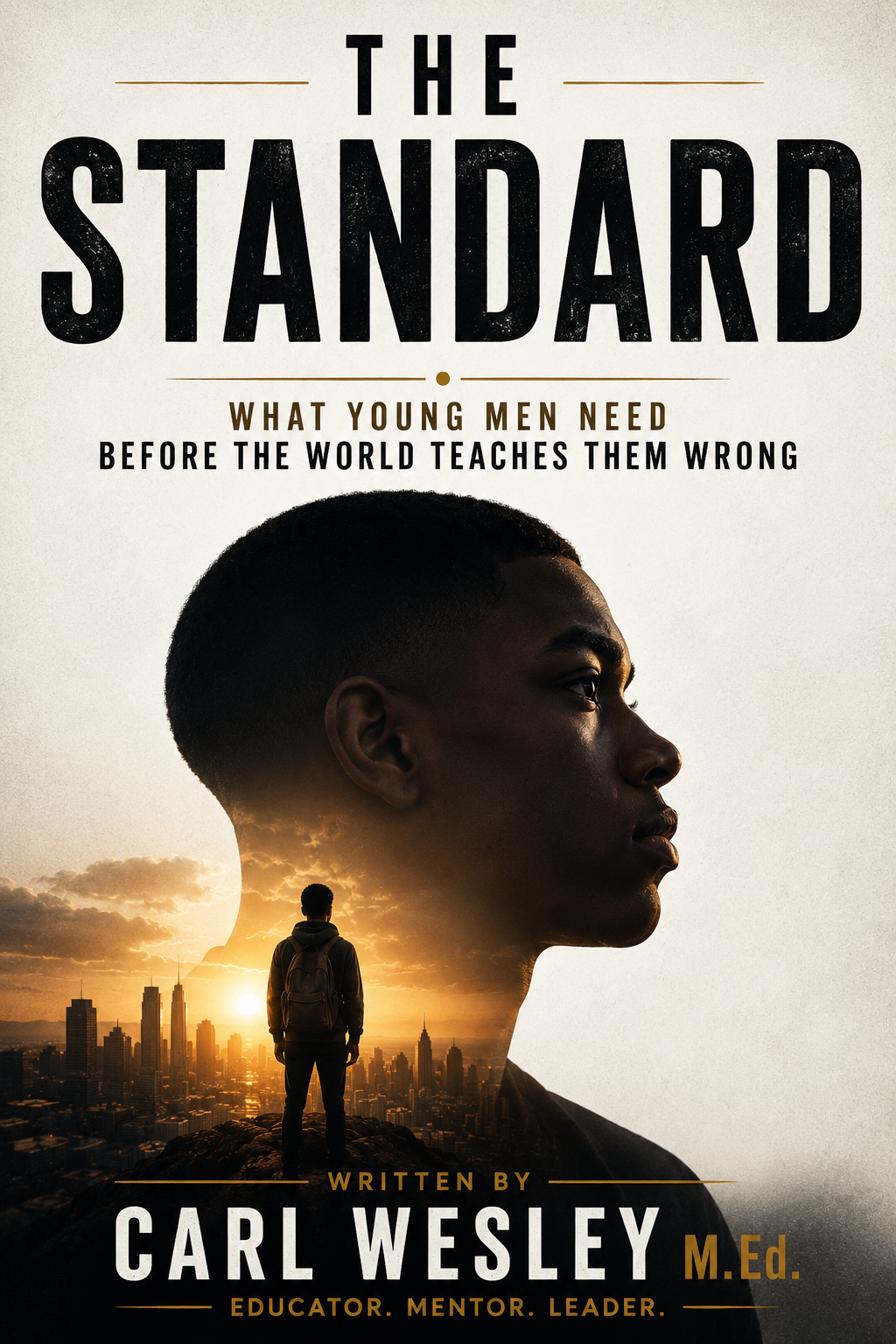
Carl Wesley, M.Ed., is an educator, author, and youth advocate, and the author of The Standard: What Young Men Need Before the World Teaches Them Wrong. He holds a master's in Curriculum and Instruction and a degree in Psychology, and builds resources that help young people develop discipline, accountability, and purpose.
Medium Bio — 120 Words
Carl Wesley, M.Ed., is an educator, author, entrepreneur, and youth advocate committed to helping young people develop discipline, confidence, accountability, and a stronger sense of purpose.
He is the author of The Standard: What Young Men Need Before the World Teaches Them Wrong — written as a mentor in book form, giving young men guidance many are expected to learn only after costly mistakes, and giving parents, educators, and mentors a resource for starting honest conversations.
Carl holds a Master of Education in Curriculum and Instruction and a bachelor's degree in Psychology. His background spans education, behavior support, youth development, fitness, fashion, art, and entrepreneurship. Through books, comics, educational games, and community partnerships, he is building The Standard into a broader leadership and mentorship movement.
Long Bio — 250 Words
Carl Wesley, M.Ed., is an educator, author, entrepreneur, and youth advocate whose work is rooted in a simple belief: the right lesson, conversation, or mentor can change the direction of a young person's life.
As an educator, Carl has worked closely with young people from a wide range of backgrounds. He has seen intelligence hidden behind humor, potential buried beneath insecurity, and pain expressed through anger or poor decisions. Those experiences led him to write The Standard: What Young Men Need Before the World Teaches Them Wrong.
The book is written as a mentor in book form. It gives young men the guidance many are expected to pick up only after making costly mistakes, and it gives parents, educators, coaches, counselors, and mentors a resource for starting honest and meaningful conversations. It is built to be read with a young person, not at them.
Carl's commitment to this work is personal. Many of the young men he grew up with experienced incarceration. Some remain incarcerated; others are no longer here. Their stories are a continuing reminder that talent and potential are not always enough — that young people also need direction, accountability, positive examples, and someone willing to challenge them before the world does.
Carl earned a Master of Education in Curriculum and Instruction and a bachelor's degree in Psychology. His background includes education, behavior support, youth development, fitness, fashion, art, and entrepreneurship.
Through books, comic books, educational games, mentorship resources, and community partnerships, Carl is building The Standard into a leadership and mentorship movement designed to reach young people wherever they are.
Downloads
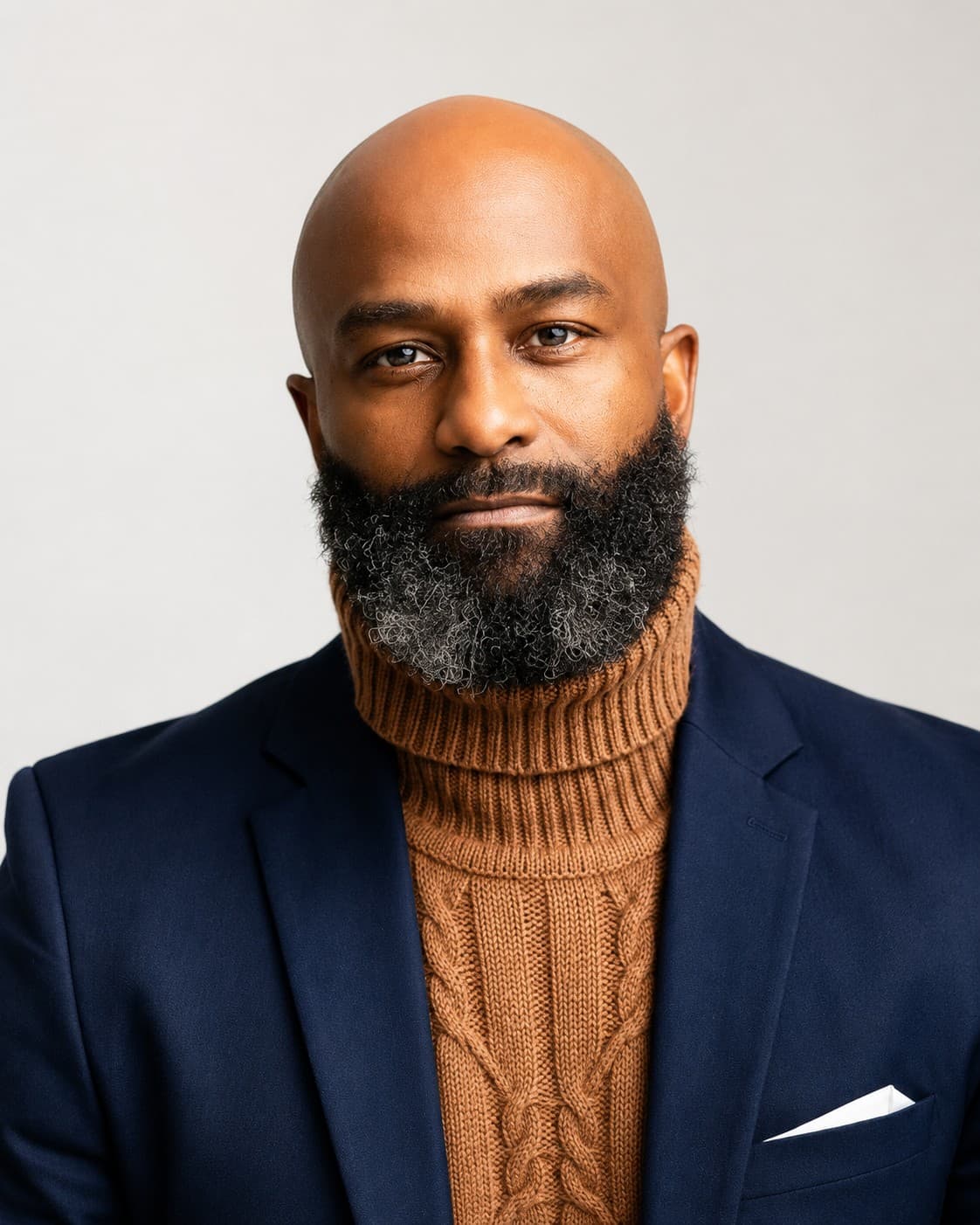
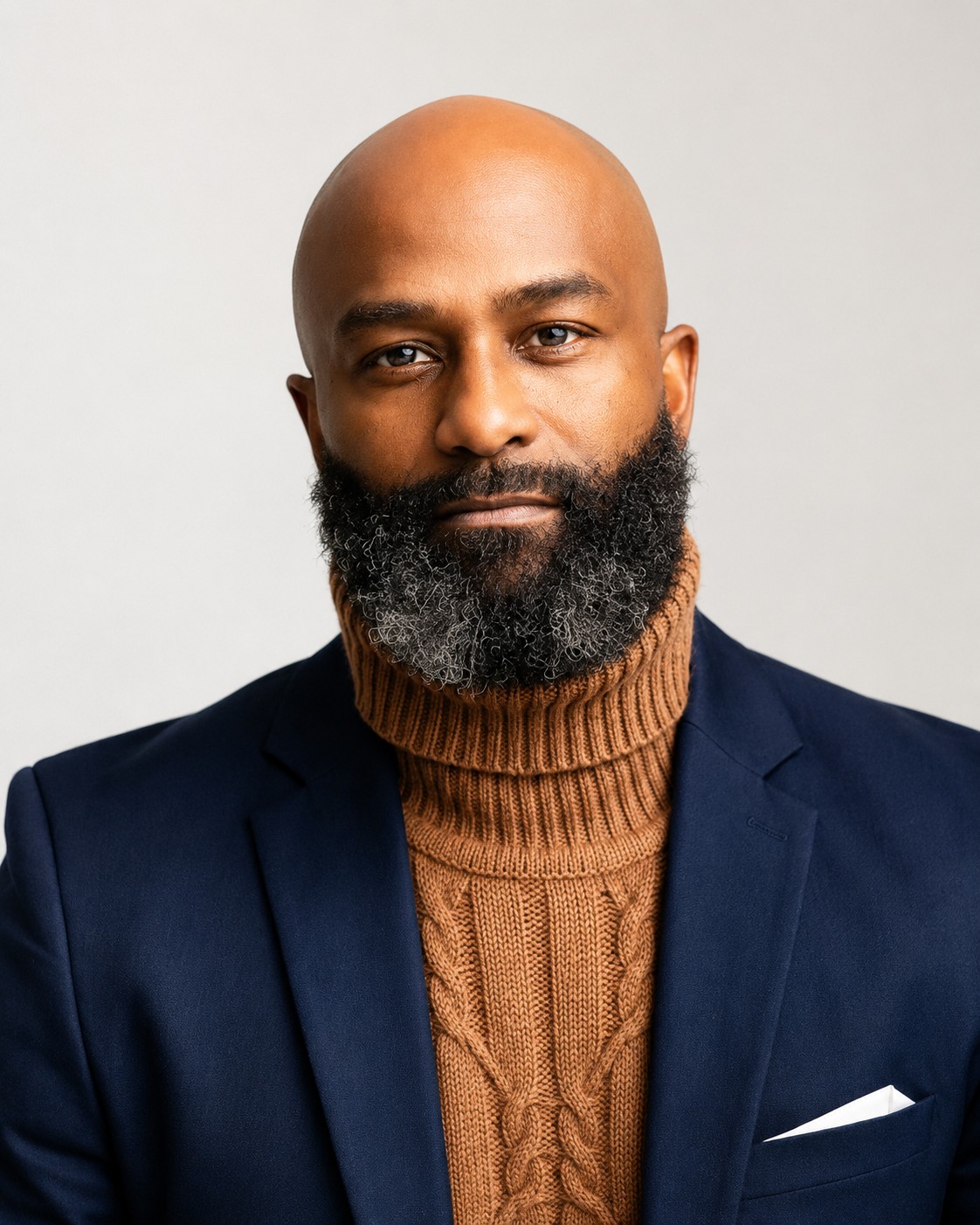
Headshots & Assets
Images may be used for editorial coverage of Carl Wesley and The Standard. Please credit Carl Wesley Publishing.
These themes can guide podcast conversations, interviews, panels, school visits, and community discussions with Carl.
The positive and negative influences that shape boys and young men
Identity, discipline, character, emotional control, and accountability
Why young people often receive important wisdom only after making costly mistakes
Mentorship and the importance of strong, positive male examples
Parenting, education, and communicating effectively with young men
Career exposure, STEM opportunities, and showing young people paths beyond sports and entertainment
The lessons we learned while growing into the men we are today
Success, maturity, overcoming setbacks, and making better choices
What it means to be a strong, successful, and responsible Black man
How adults can share wisdom so the next generation does not always have to learn through painful experience
For Producers
Suggested Questions
Podcast HostWhat does "before the world teaches them wrong" actually mean?
Podcast HostWhat's the most common thing adults get wrong when talking to young men?
Podcast HostYou write that talent and potential aren't always enough. What is enough?
Podcast HostWhy is identity the first standard rather than discipline?
Podcast HostWhat do you say to a parent whose son has stopped talking to them?
Podcast HostHow should a teacher handle a boy whose anger shows up as defiance?
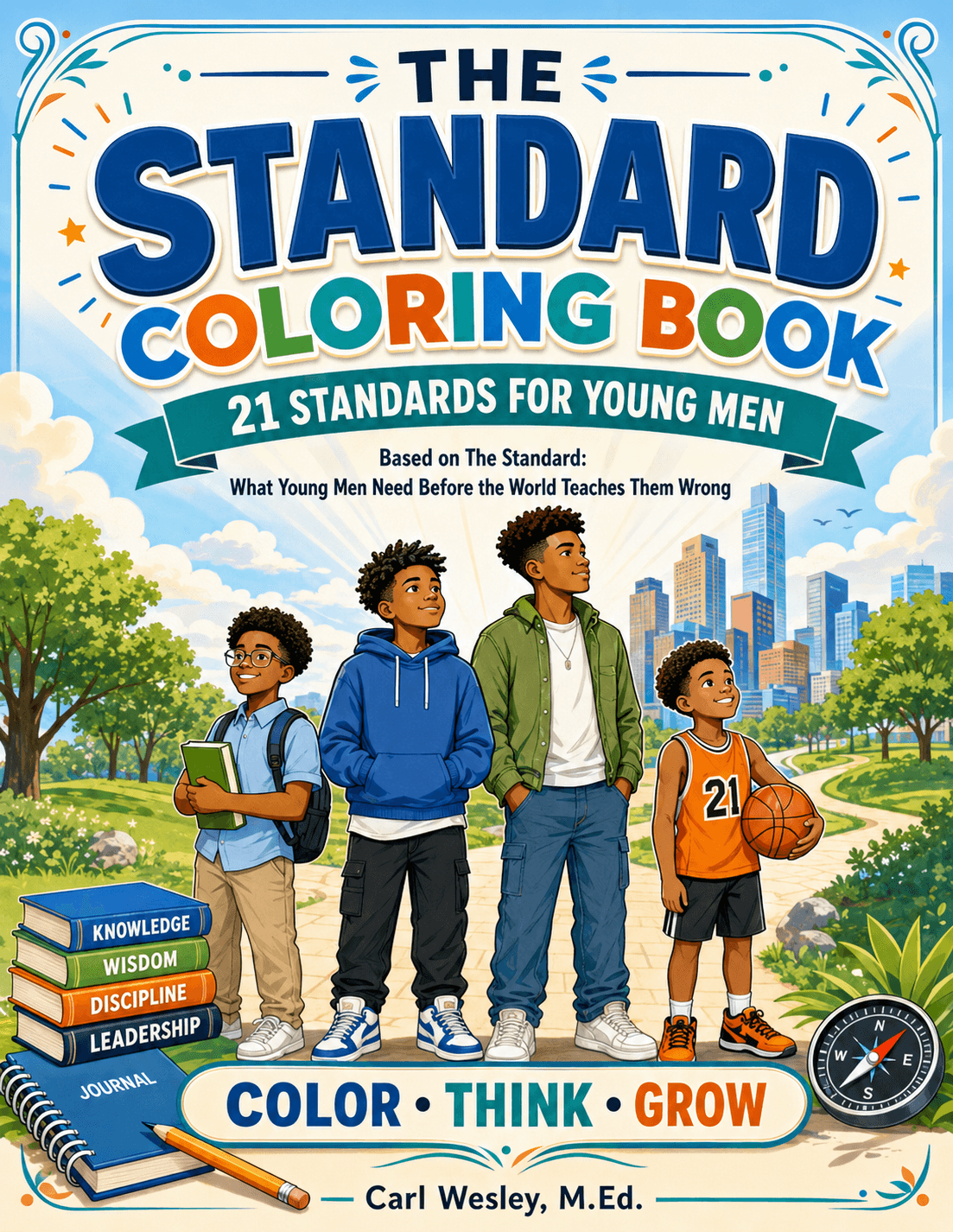
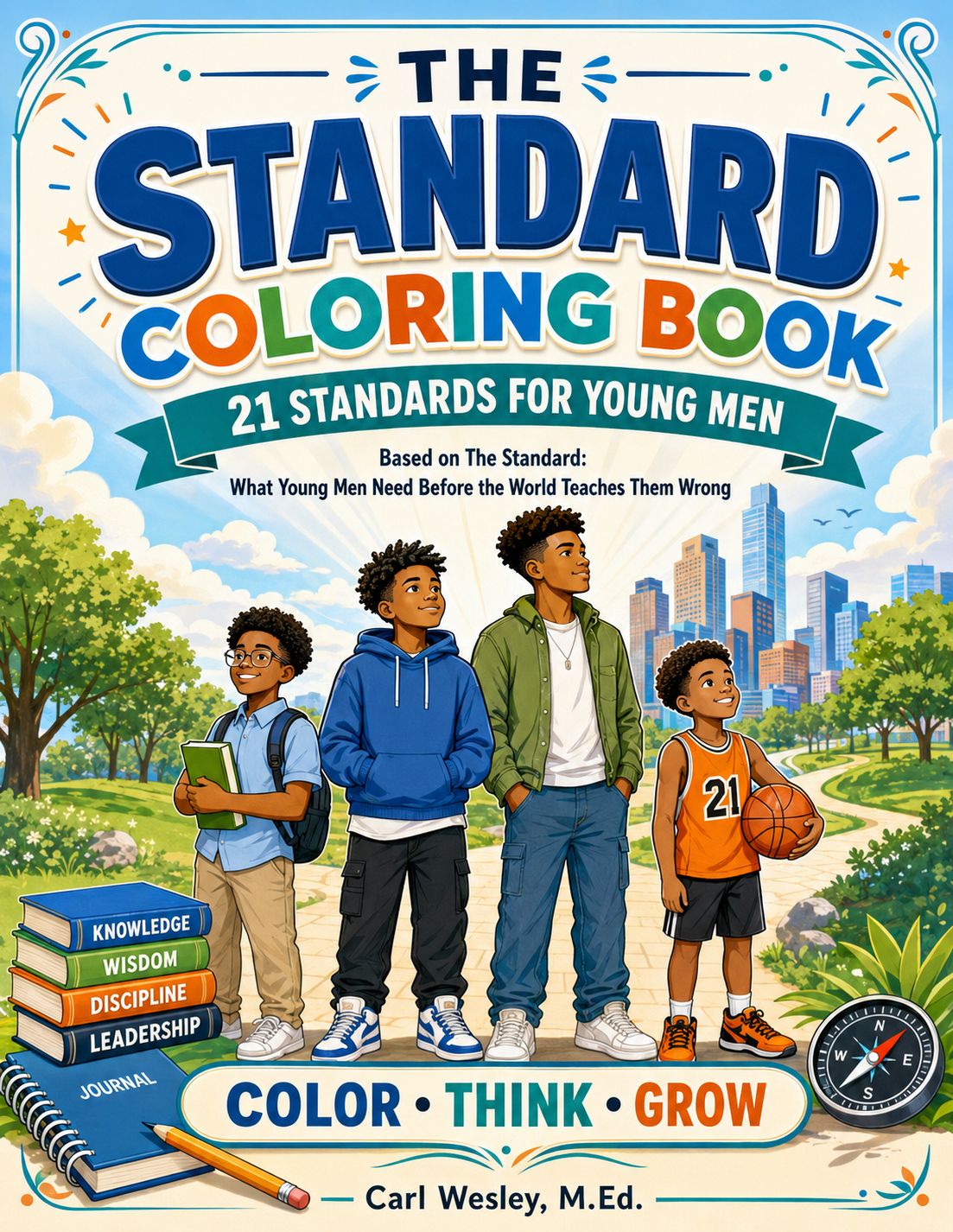
Podcast HostWhy turn the material into a comic book and a coloring book?
Podcast HostWhat does emotional control look like for a fifteen-year-old, practically?
Podcast HostWhat would you tell your younger self?
Podcast HostWhat does success look like for The Standard in five years?
In His Own Words
Carl Wesley on The Standard
A clear conversation format for producers, journalists, students, and listeners.
Podcast Host
What does "before the world teaches them wrong" actually mean?
Carl Wesley
The world is going to teach him something. That part isn't up for debate. The only question is whether he learns it from you first or from everything else.
Carl Wesley
And everything else is a lot. It's the bully at school. It's the streets, the gangs, the fast money, the crowd that makes a bad decision look like a brotherhood. It's the corner store, where he might see something or hear something he had no business seeing or hearing. It's social media, running twenty-four hours a day, telling him what a man is, what success looks like, what he's supposed to want. None of that is waiting for him to be ready.
Carl Wesley
Here's what I've learned: none of that lands the same way on a young man who has a foundation. If he's got rooted values, rooted morals, an actual moral compass, he can hear the wrong thing and recognize it as the wrong thing. He's got something to measure it against.
Carl Wesley
But if he's empty when he walks out that door, the world will fill him. It will. And it won't ask his permission, and it won't wait until he's old enough to handle it.
Carl Wesley
That's why it's before. Before he walks out that door, he needs to know how to act. How to treat people. How to build his character. How to carry discipline. How to protect himself. Not after it costs him something. Before.
Carl Wesley
Because after is expensive. I've watched what after costs.
Podcast Host
Why is identity the first standard rather than discipline?
Carl Wesley
Because discipline doesn't hold without it.
Carl Wesley
A lot of people never figure out who they are. Not just young men, grown adults. They don't know their place in the world. They don't know what profession to pursue. They don't know their own talents. They've never sat down and worked it out.
Carl Wesley
Now, discipline is a way of saying: I'm going to do what I have to do regardless of how I feel about it. That's what it is. But that has to be rooted in something, passion, love, real desire. You can't do the thing you don't feel like doing, day after day, for a reason you can't name. It won't hold. And it's almost impossible to develop if you're unsure who you are or what you're trying to become.
Carl Wesley
That's why identity comes first. It's the foundation discipline stands on.
Carl Wesley
And there are levels to identity. It's not "I want to play basketball." It's that your identity is basketball. You become the basketball. It becomes part of your brand, so when somebody sees you, that's what they think of. That's a young man who has identified himself as an athlete. That's different from someone who likes the sport.
Carl Wesley
Here's the part that concerns me. So many young men are seeking identity from negative influences, and it's for one reason: they don't know who they are. They see somebody in the streets, or in a gang, or whoever's influencing them, and it looks cool. So they want to be it. But they've never actually been in it. They don't know what it truly entails. They're chasing an image of something they've never lived.
Carl Wesley
That makes them followers. And if you are a follower, you have no identity.
Podcast Host
What's the most common thing adults get wrong when talking to young men?
Carl Wesley
There's a disconnect between the old and the young, and it comes from one place: adults forget they were children first.
Carl Wesley
That's it. They forget. They look at a young man like he's a different species, when really, we're just the older version of them. Same person, further down the road.
Carl Wesley
And in forgetting, they lose the details that would actually help them. They forget how impressionable they were at that age. How much one comment from the wrong person could move them. They forget the mistakes they made, and how many of them there were. They forget how much patience somebody had to have with them before they figured anything out.
Carl Wesley
So when you're talking to a young man, start there. Let him speak. Be present. Show compassion. Let him express himself, really express himself, not the version he thinks you want to hear.
Carl Wesley
But here's the part people get wrong on the other side. You can't get so close that he forgets you're the adult. That's not warmth, that's abandoning the post. He needs you to be someone he can talk to and someone he answers to. Both. At the same time. If you give up the second one trying to get the first one, you've taken away the thing he needed most from you.
Carl Wesley
Patience, guidance, and love. That's what it takes. And a lot of the time, being there matters more than providing. People think they're doing their job because they paid for something. Being there and expressing that love, that's what turns a young man away from the wrong path. Not the money. The presence.
Podcast Host
You say talent and potential aren't always enough. What is enough?
Carl Wesley
Talent by itself isn't enough. It never was.
Carl Wesley
What carries a young man is character. Discipline. Work ethic. Showing up, actually showing up, on the days he doesn't feel like it. A good attitude when things aren't going his way. Respect, given before it's earned back.
Carl Wesley
Those are invisible characteristics. Nobody's recruiting for them. Nobody claps when a young man has them. But they're the difference between talent that turns into something and talent that doesn't.
Carl Wesley
It comes down to how he moves and how he responds. That's it. How he moves when nobody's checking, and how he responds when something goes wrong. Those two variables will change his life in either direction.
Podcast Host
What do you say to a parent whose son has stopped talking to them?
Carl Wesley
Before I say anything, I want to find the root cause. Because "he stopped talking" isn't the problem, it's the symptom.
Carl Wesley
So I'm asking questions. What's the outside stimulus? What changed? Are you the only parent in the home? What happened at school? What happened before this started? I can't tell you how to proceed until I understand the why.
Carl Wesley
And here's the question I really want answered: is it personal? Is he not talking to you, or is he not talking to anybody? Because if he's still talking to his siblings and his friends and he's shut down only with you, that's one situation. If he's gone quiet with everyone, that's a different one entirely. Those don't get the same response.
Carl Wesley
But whatever the answer is, this part doesn't change: keep showing love. At all times. Even while he's shutting you out. Especially then. That young man still needs love, still needs attention, still needs guidance, the need didn't disappear just because he stopped asking.
Carl Wesley
Now, if he's not adhering to your guidance, stop leading with words. Lead by example. Keep pouring into him. Keep being there. Keep being the role model he needs, whether he's acknowledging it or not.
Carl Wesley
And give him space. He'll come around when he's comfortable. You can't force this, I've watched people try, and forcing it sets you back further than where you started. Sometimes you have to let things breathe and let it come natural. Your job is to make it safe enough for him to come back, not to drag him back.
Carl Wesley
And if none of that works? Find somebody who can reach him. An uncle, a coach, a teacher, a mentor. That's not you failing. Sometimes the message is right and the messenger just isn't the one he can hear it from right now. Swallow that and get him the person who can.
Podcast Host
How should a teacher handle a boy whose anger shows up as defiance?
Carl Wesley
It starts before the incident. You build the relationship first, some kind of rapport, so that student is comfortable communicating with you. If the first real conversation you have with him is the one where he's blown up, you've already lost.
Carl Wesley
Alongside that: set expectations. Set the rules. Make them clear, and make them known before they're tested. And give positive reinforcement, catch him doing it right, not just doing it wrong.
Carl Wesley
But understand what I'm actually doing with all of that. I'm always trying to get to the root of the problem, what's really going on with him. I let him vent. I want him talking before he's exploding. Because my goal isn't to handle the misbehavior well. My goal is to get to it before it begins.
Carl Wesley
That's the same thing I'm saying in the book, just in a classroom. Before. Everything I do as an educator is trying to arrive before the moment does.
Carl Wesley
Now, when it does happen anyway, and it will. The most important thing is that I do not involve myself in a power struggle. I don't match his voice. I don't call names. I don't get disrespectful with him. The second I do any of that, we're two people arguing, and I've given up the only real advantage I had, which was being the calm one in the room.
Carl Wesley
I address the behavior. Not him, the behavior. Then I give him clear choices, and I let him have control over the outcome. He needs to understand that the choices he makes determine what happens next, and that the choosing is his.
Carl Wesley
That's the whole thing, really. A lot of defiance is a young man reaching for control. If you hand him control of the outcome, in a structure you've set, you've given him what he was fighting for, and he doesn't have to fight you to get it.
Carl Wesley
And if that doesn't work, I seek intervention. Administration, or counsel from outside. There's no shame in that. It's knowing the limits of what one adult in one room can do.
Student
What does emotional control look like for a fifteen-year-old?
Carl Wesley
Think before you speak. Think before you act. Control your hands, your mouth, and your feet.
Carl Wesley
That's it. That's the whole thing at fifteen.
Carl Wesley
It's regulation. It's the gap between what happens to him and what he does about it. Right now most young men don't have a gap, something happens and they're already responding. The work is building that space in between.
Carl Wesley
Stop being so reactive. Think before you act.
Student
But if I walk away, they'll think I'm soft.
Carl Wesley
That right there is the real problem. Not the anger, the audience.
Carl Wesley
Caring what other people think is a weakness. If you can be controlled by somebody's opinion of you, you can be controlled, period. Somebody who knows that about you can move you any direction they want, and you'll go, because you're protecting an image instead of protecting yourself.
Carl Wesley
So step one is realizing what actually matters, and the negative opinions of people around you don't. They just don't. Most of them won't be in your life in two years. Some of them won't be in your life in two months.
Carl Wesley
But you can't just tell a young man that and expect it to hold. He needs to be rooted. And not only rooted in understanding, rooted in practical examples of why. Real ones. He needs to see what happened to somebody who didn't walk away.
Carl Wesley
Because the stronger the why, the easier the walk-away gets. When his why is strong, peer pressure isn't tempting anymore. It's not a fight he's resisting, it stopped being attractive. That's the difference between a young man white-knuckling it and a young man who's actually free.
Podcast Host
Why turn the material into a comic book and a coloring book?
Carl Wesley
Because not every young person is going to read a book. That's just the truth, and being frustrated about it doesn't change it.
Carl Wesley
So if he won't read the book, will he read a shorter version, with color and pictures, that's more appealing to look at? A lot of the time, yes. And now the lesson got to him. That's all I care about.
Carl Wesley
It's differentiation. Same thing I'd do in a classroom. Same outcome, different methods. You don't lower the standard because a student learns differently, you find the door he'll actually walk through. The comic and the coloring book are doors.
Carl Wesley
The coloring book especially gives him something to do other than read. He's answering the same questions that are in The Standard, but his hands are busy and it doesn't feel like an assignment. Some young people open up in exactly that moment.
Carl Wesley
I'll be honest about the other side of it too. It grows the business. It grows the brand. It extends the catalog so there's something for everyone at different price points. That's real, and I'm not going to pretend it isn't.
Carl Wesley
And I enjoy it. I like being a creator. Making the comic and the coloring book was fun, and I think that shows up in the work. Young people can tell the difference between something built for them and something built at them.
Student
What would you tell your younger self?
Carl Wesley
Prepare yourself with knowledge. Arm yourself with it.
Carl Wesley
When I was younger, I just wanted to get out of high school. I hated school. I didn't want to learn anymore. I figured once I graduated, what do I need a book for? What do I need any of this for? I felt like I knew it all.
Carl Wesley
That was ignorant thinking. I'll say it plain, because it's true. I had no idea how difficult life was. No idea what to expect. And nobody can tell you that at seventeen in a way you'll actually hear.
Carl Wesley
So I'd tell myself: strengthen your body and your mind at the same time. Never stop learning. Seek knowledge at all costs, not for a grade, not for a diploma, for yourself.
Carl Wesley
I'd have started and finished college much sooner. And I'd have explored more, actually looked at what fields and careers I could have been successful in, instead of assuming I already knew. Back then, entrepreneurship was the only thing I thought could make you rich. That's what I believed, and I was far from the truth. There were doors everywhere I never even looked at, because I'd already decided there was one.
Carl Wesley
And the last thing, which I didn't understand at all back then: appreciate everything. Every moment. Appreciate the time you have with people. Life is short.
Carl Wesley
That one I learned the hard way.
Podcast Host
What does success look like for The Standard in five years?
Carl Wesley
A household name. Adopted by organizations and school districts. On the shelves in national bookstores, not just online. A top seller on Amazon, still selling worldwide, in over fifty countries.
Carl Wesley
And I'll say the part people don't say: The Standard alone making millions. That's the goal. I'm not going to be shy about it.
Booking & Press
Bring Carl into the conversation.
For interviews, podcasts, features, speaking engagements, school visits, and media requests.